
Start from the operating duty
Applications
Review how material, duty, geometry and installation conditions guide screw flight, auger and production-equipment selection.
The same helix can serve very different work
Screw flighting is used in conveying, feeding, mixing, extraction, heat-transfer and agricultural equipment. An application label is only the beginning: the material, operating environment, speed, duty cycle, wear, cleaning requirement and connection to the shaft determine what should be reviewed.
Bulk material conveying
For grain, feed, aggregates, powders, pellets or sludge, provide the material characteristics and the conveyor duty. Bulk density, particle size, moisture, abrasiveness, temperature and tendency to bridge affect geometry and material selection. Capacity claims require the complete conveyor design and cannot be inferred from the flight alone.
Agricultural and feeding equipment
Replacement augers and beaters need the original dimensions, hand, drive connection and photographs of the worn part. Flexible auger feed lines also depend on the tube route, bends, elevation, feed source, hopper arrangement and control logic.
Industrial and process equipment
Mixers, heat exchangers and specialised process machines may use helical parts for duties other than ordinary conveying. Twisted tape inserts, for example, are selected from tube fit, material and temperature information. They should not be specified using conveyor-flight assumptions.
Ground screw manufacturing
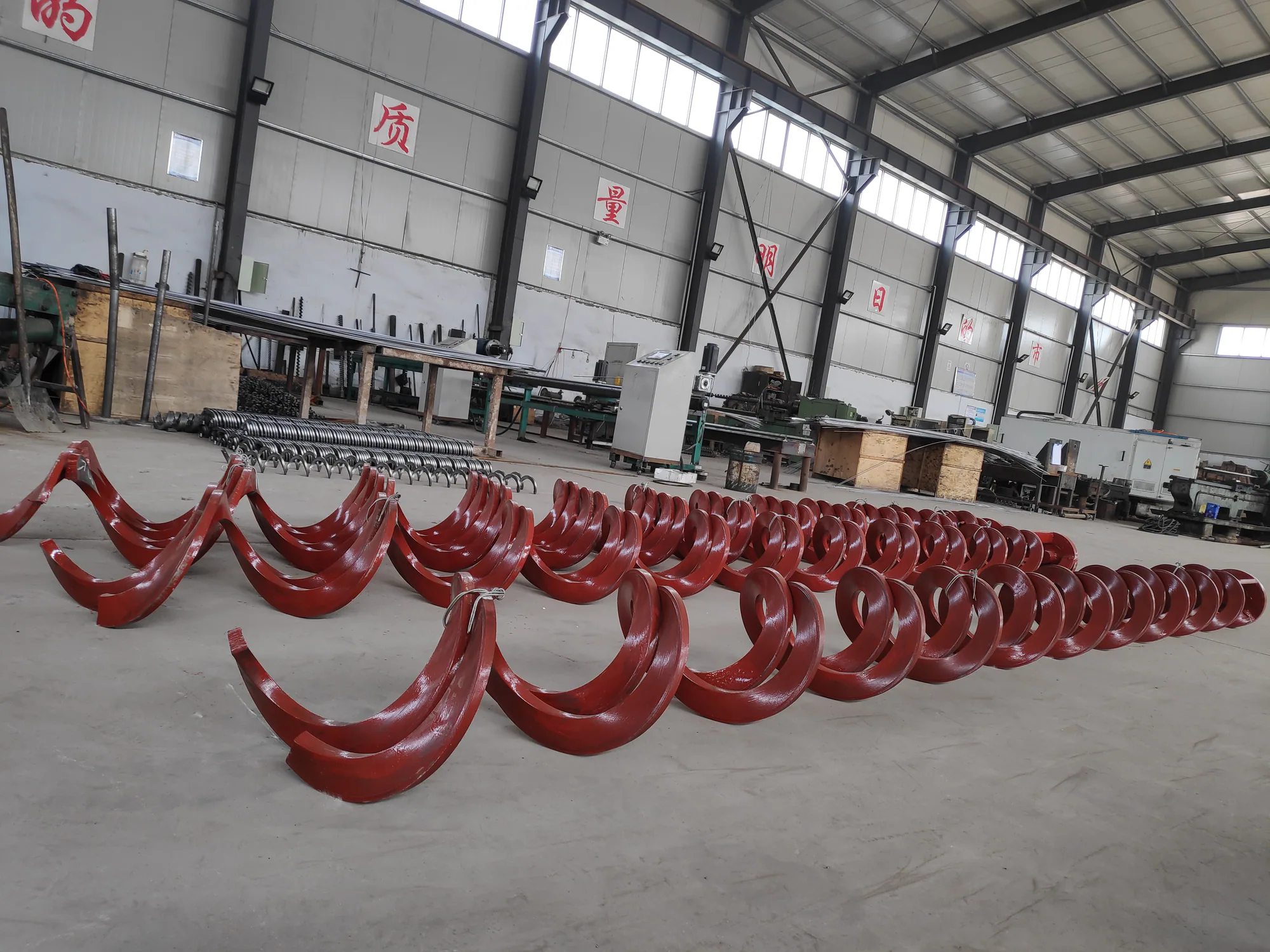
Ground screw production links pipe preparation, tapering, spiral positioning and welding. The finished ground screw drawing defines the stations and tooling under review. A complete-line claim is only made after every included operation and interface is confirmed.
What to include in an application review
- Drawing or sample photographs
- Material being conveyed or processed
- Operating direction, speed and duty cycle
- Temperature, corrosion, abrasion and cleaning conditions
- Existing shaft, tube, drive or production-line interfaces
- Required quantity or production output
Dedicated application pages will be released only when the relevant project evidence and operating boundaries are available. Until then, the product and category pages remain the primary source for selection.