
Match the process to the geometry
Manufacturing Capabilities
Review SpiralFlights forming routes, drawing inputs, production checks and equipment integration considerations for screw flight projects.
Different flight geometry needs different forming logic
The manufacturing route is selected from the finished requirement. Continuous cold rolling, mould winding and sectional pressing solve different geometry and production problems. The relevant method depends on diameter, pitch, thickness, strip or plate width, material behaviour, required length and order quantity.
Continuous cold rolling
Flat strip is progressively formed through a roller arrangement to create continuous flighting. The process is reviewed for the target ID, OD, pitch, thickness and material. It is particularly relevant where a continuous helix and repeatable geometry are needed, but the available model range must still be checked against the drawing.
Continuous mould winding
Strip is formed around a spindle and controlled by tooling to produce a continuous, near-equal-thickness flight. The spindle, tooling and strip section are linked, so a sample range does not automatically cover every combination. Final geometry and the required continuous length are reviewed together.
Sectional forming
Individual segments can be formed for large diameters, thicker plate, special materials or features that are difficult to achieve by a continuous method. Tooling follows the segment drawing. Joint preparation, cut-outs, gaps, bosses and the later shaft-welding plan should be identified before forming.
Supporting fabrication and process equipment
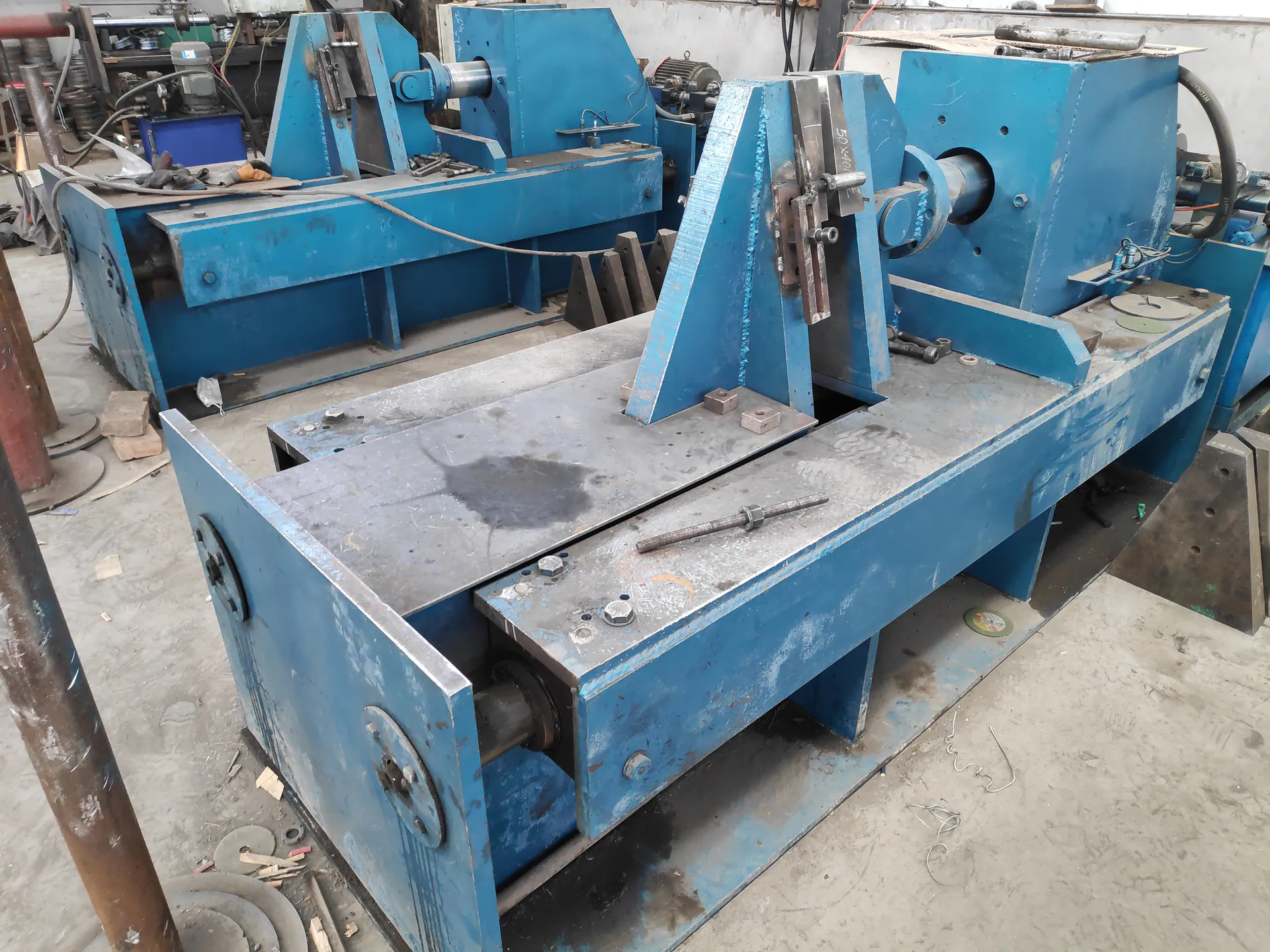
Available project material also covers strip and plate preparation, cutting evidence, pipe-end tapering, induction heating, spiral positioning and welding. These capabilities may support a product order or form part of a machine-supply discussion. Laser cutting is shown only as manufacturing evidence and is not offered as a standalone product page.
Drawing and production review
For screw flight products, the review normally includes OD, ID, pitch, thickness, hand, material, length, quantity and shaft connection. For machinery, it expands to the planned product range, output target, electrical supply, floor space, tooling, material handling and upstream/downstream operations.
Checks before release
- Confirm material designation and incoming condition
- Verify drawing dimensions and forming route
- Review tooling or roller configuration
- Check the first-off part against agreed dimensions
- Identify welding, assembly and inspection responsibilities
- Confirm packaging and delivery scope in the quotation
The exact inspection record and acceptance criteria must be agreed for the order. General website ranges remain reference information until they are tied to an approved project specification.
Engineering review
Have a product, machine or process to review?
Send the information you have. We will help organise the relevant product and manufacturing questions before quotation.