
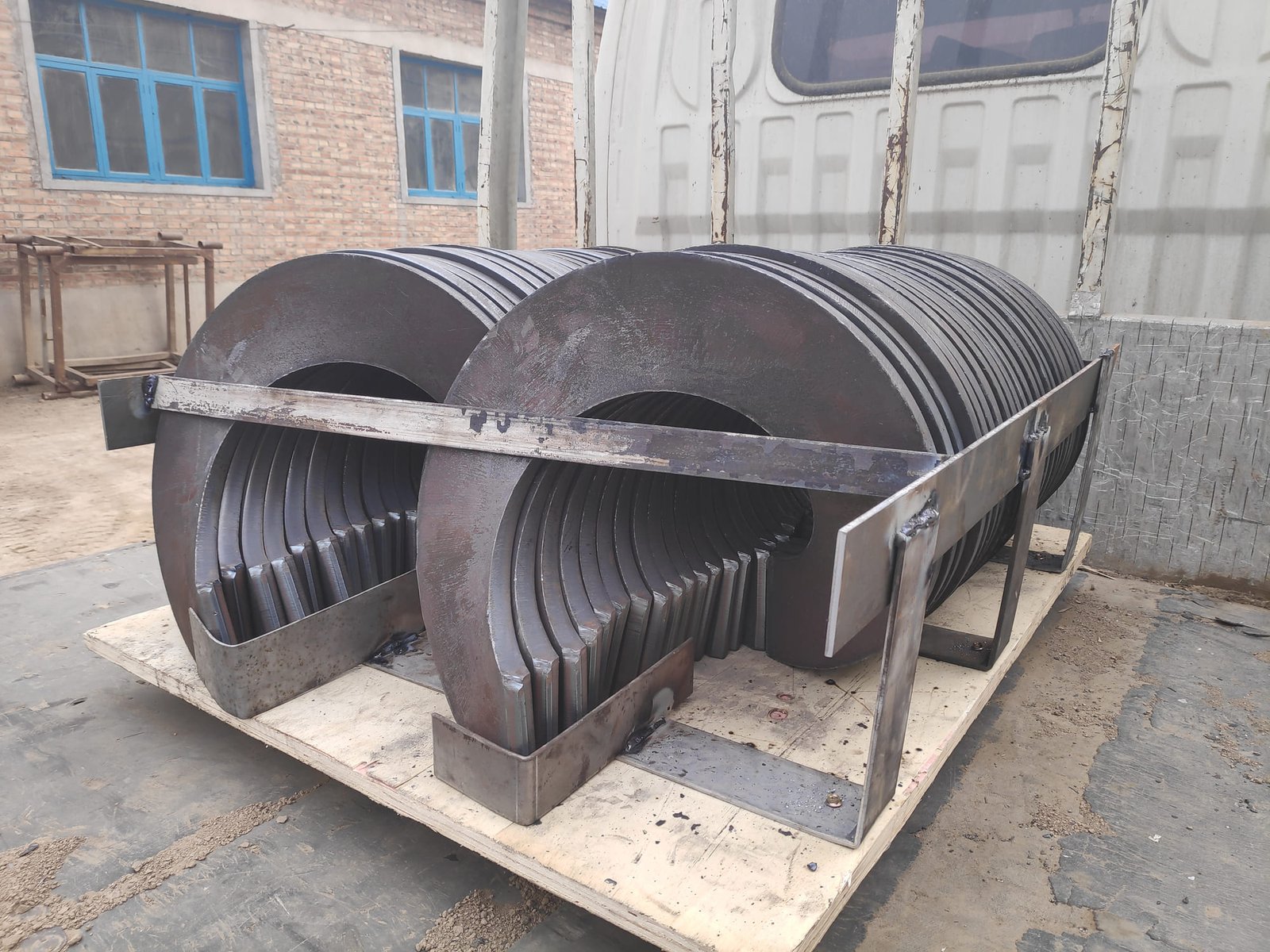
Screw flight
Sectional Spiral Blade
Cold-formed single-pitch spiral blade segments for large and heavy custom assemblies.
Engineering fit
Built around the dimensions, material and production target that matter
Single-pitch, equal-thickness helical segments for large diameter, thick plate, wear-resistant or stainless steel flight assemblies.
Use the stated range as a practical starting point. We confirm the final configuration against your drawing, material and operating conditions.
Discuss this product- Large screw conveyors
- Pile foundation work
- Mining and wear applications
- Replacement and assembled flight sections
Product data
Product Specifications
| Parameter | Specification |
|---|---|
| Segment geometry | Individual helical segment made to the approved OD, ID, pitch and thickness |
| Segment and assembly length | Confirm segment count, single-segment length and finished assembly length |
| Joining preparation | Supplied to the agreed edge, root and weld preparation |
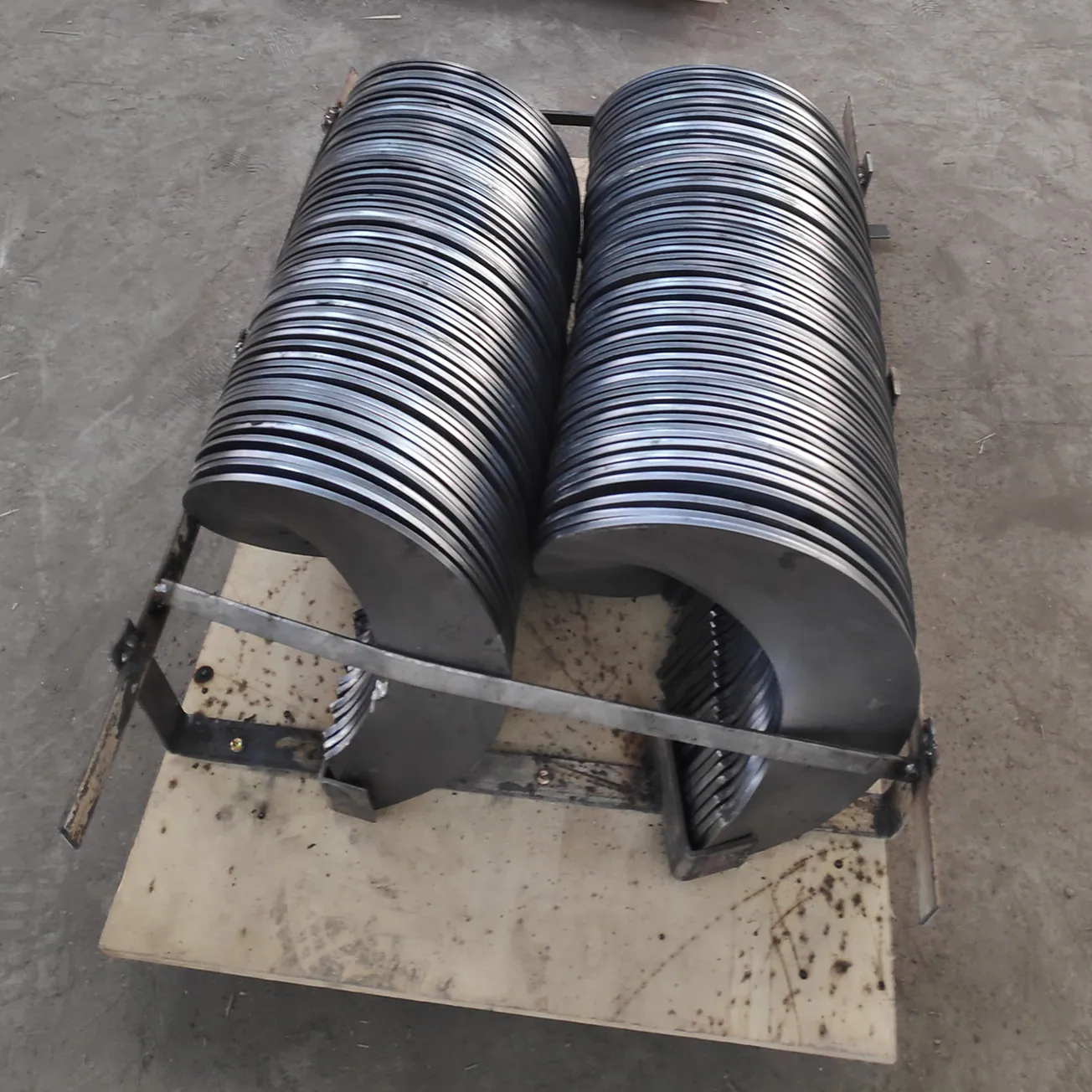
| Shipping arrangement | Loose segments, matched sets or agreed subassemblies |
| Maximum outside diameter | 1,800 mm |
| Maximum thickness | 40 mm |
| Minimum inside diameter | 25 mm |
| Pitch range | 25–1,300 mm |
| Maximum half-width | 800 mm, calculated as (OD − ID) / 2 |
| Materials | Carbon, alloy, manganese, stainless and wear-resistant steel |
Workshop reference
Product and process views
Production approach
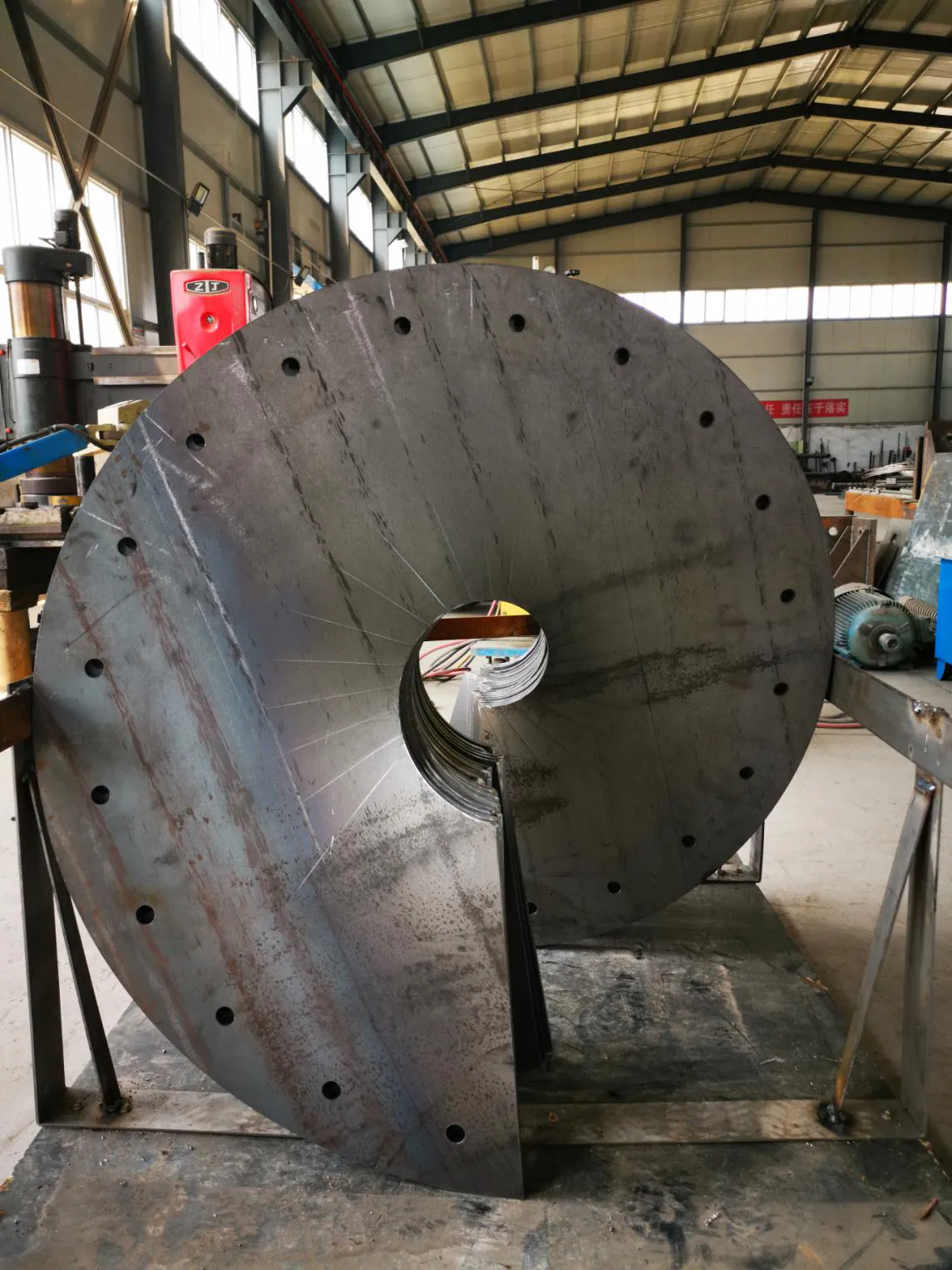
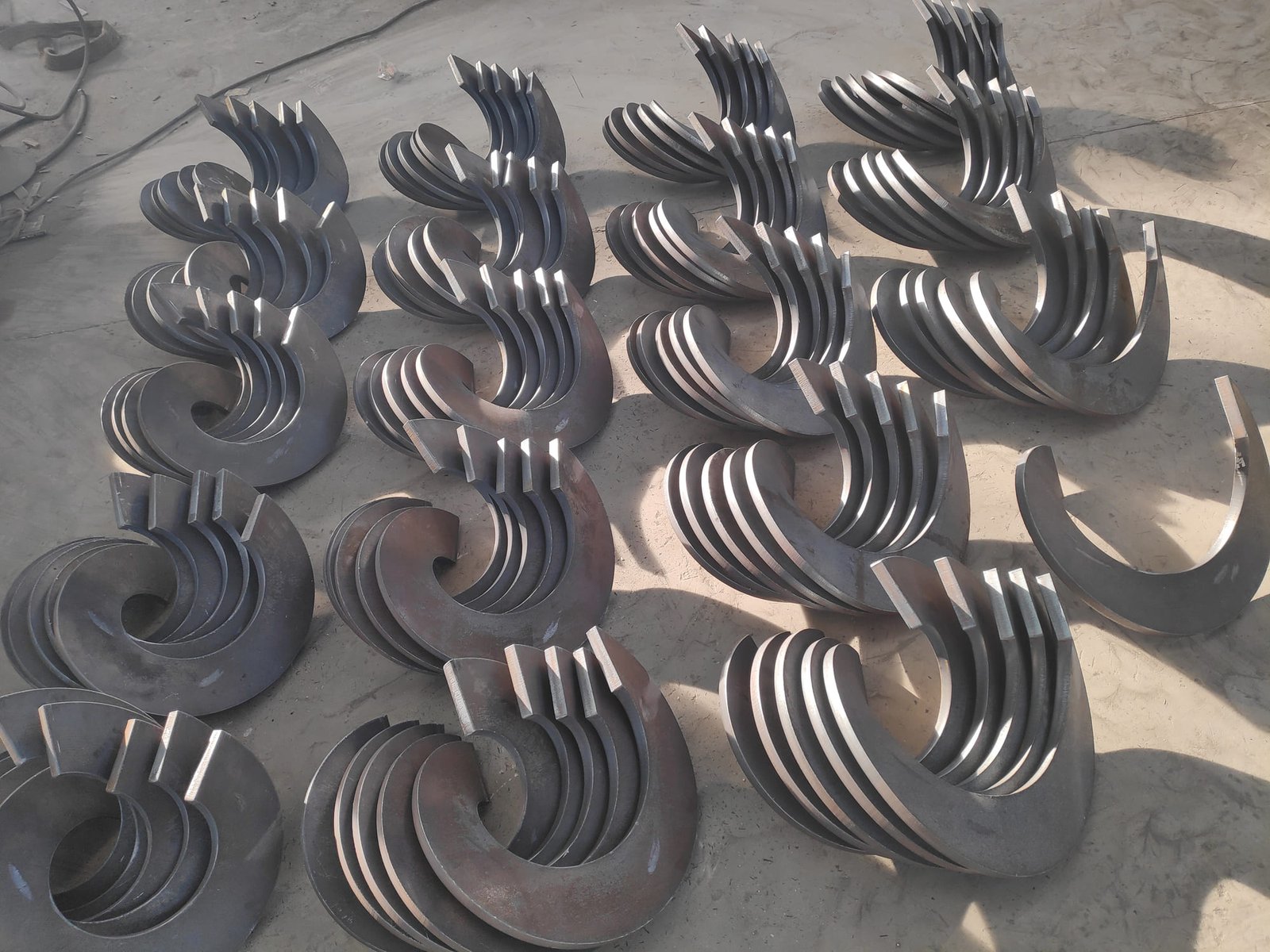
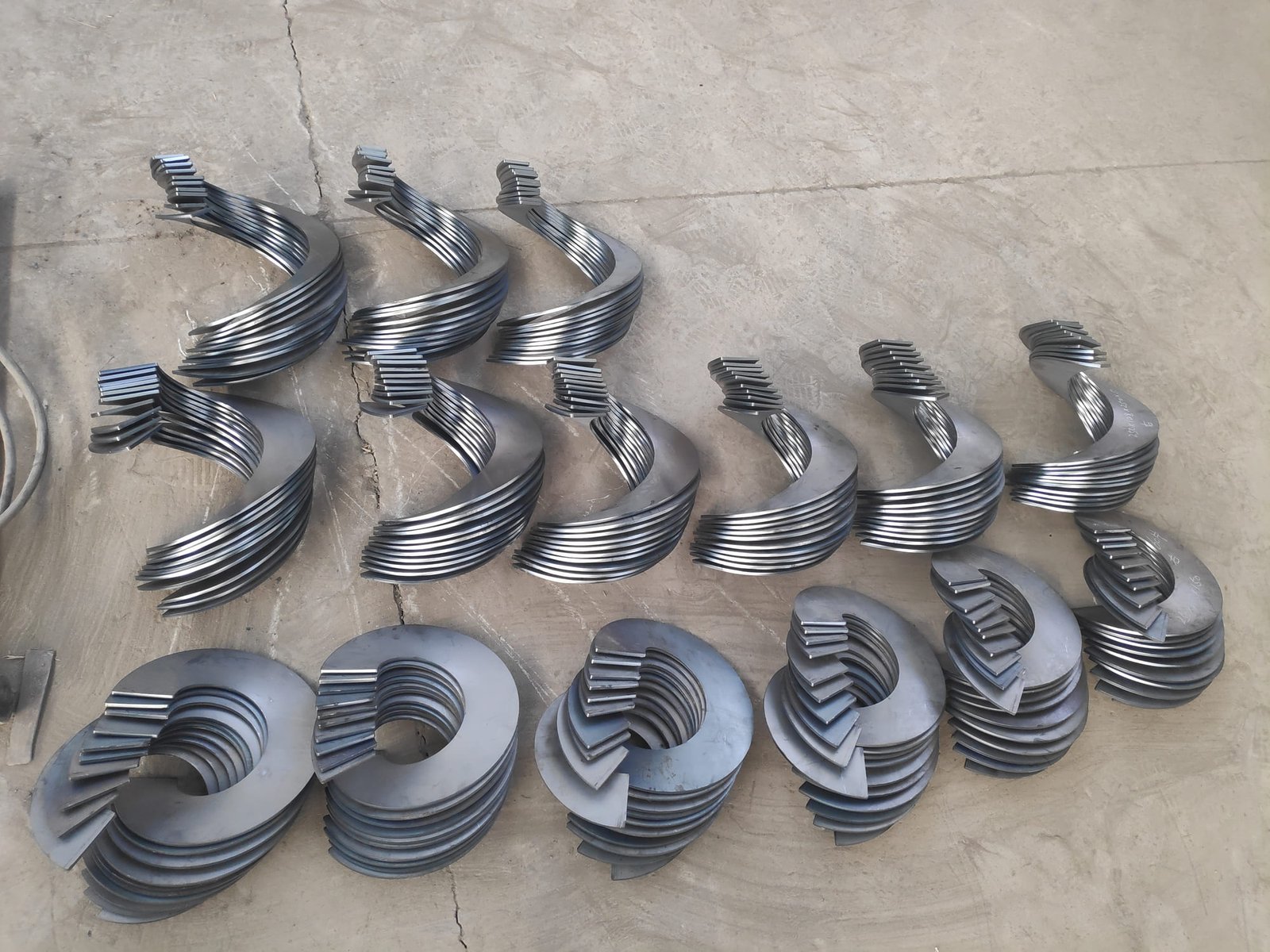
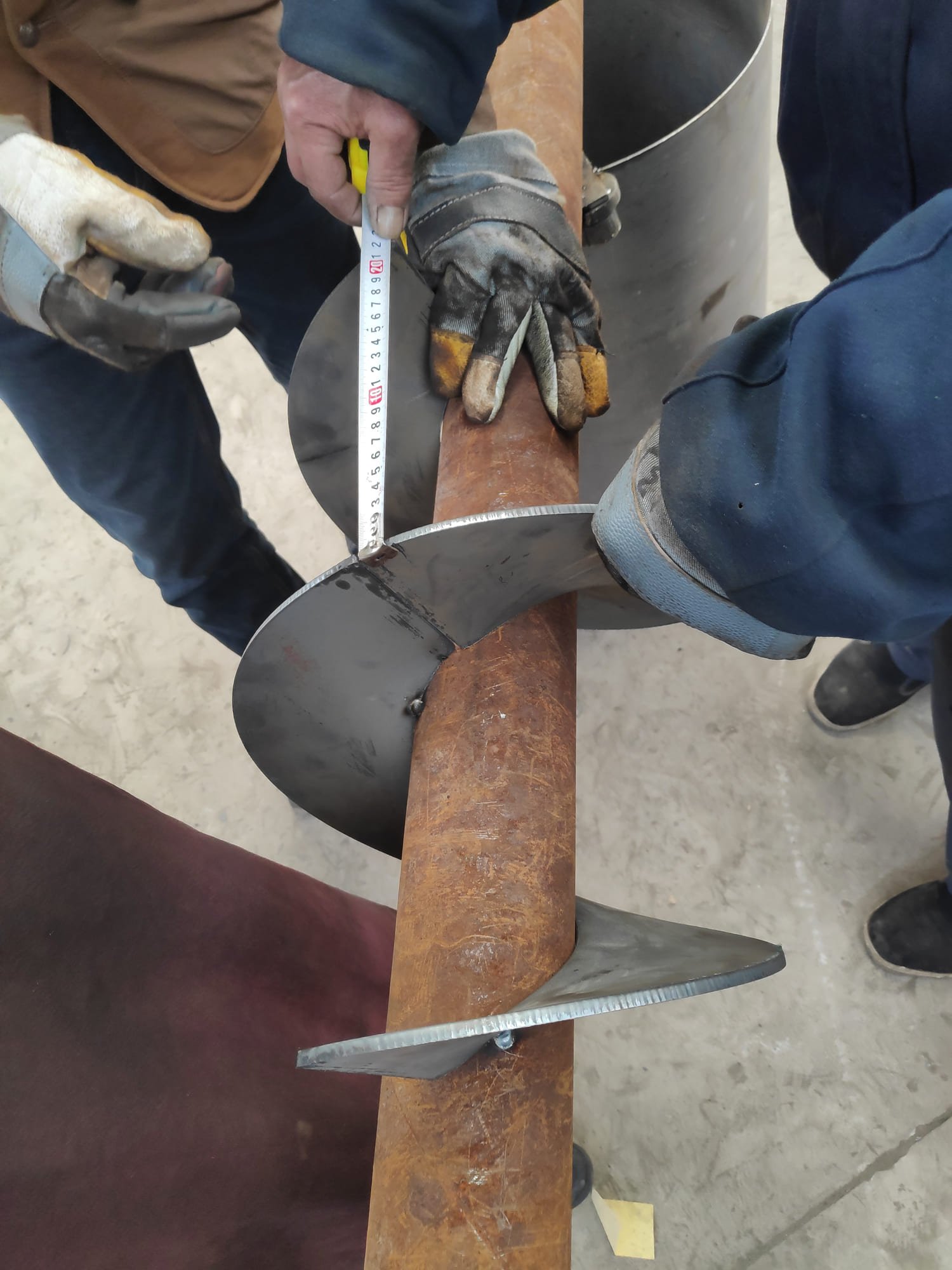
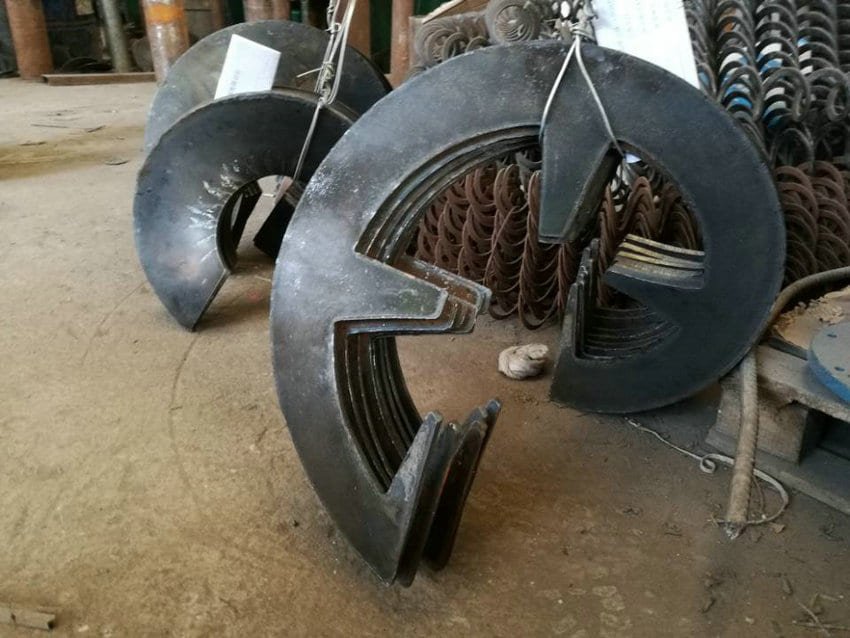
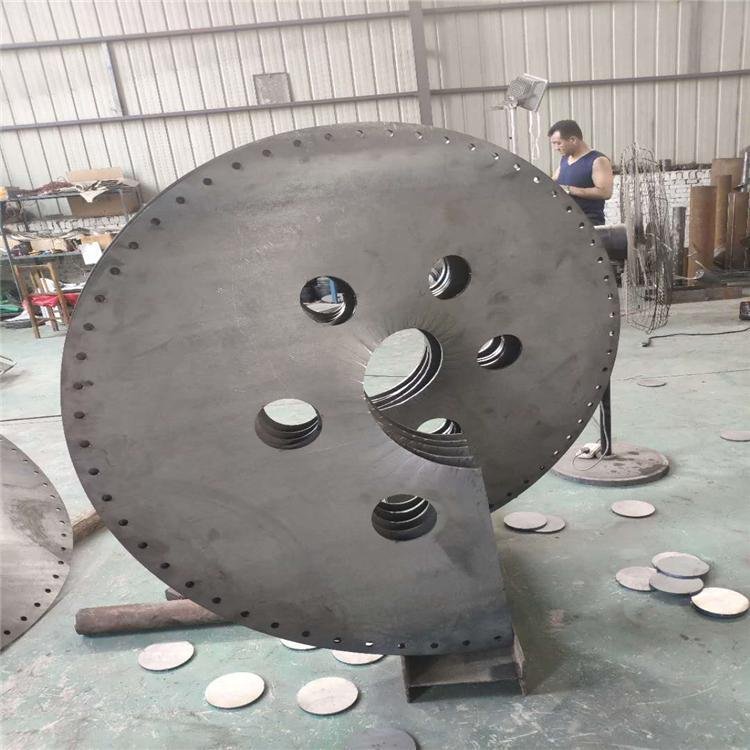
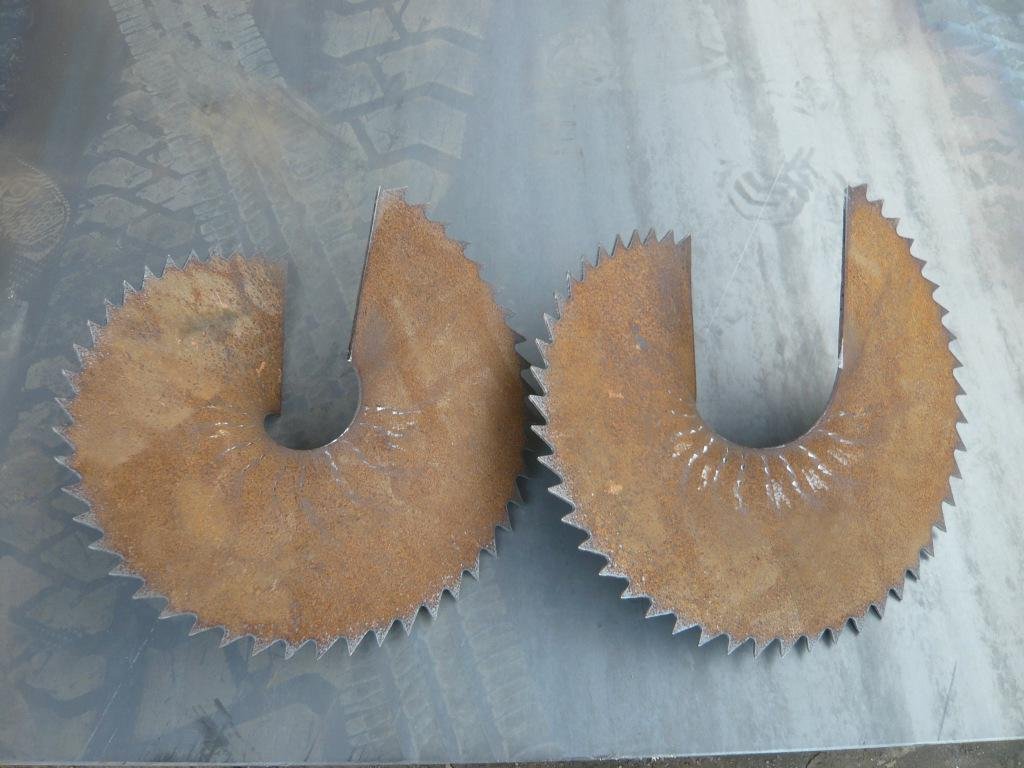
Sectional blades are cold-formed as individual pitches, then supplied for assembly and welding. This route is suited to dimensions and materials that are difficult to control with continuous rolling.
Configuration options
Equal or variable diameter, equal or variable pitch, and features such as bosses, gaps or shaped inner and outer edges can be reviewed from the drawing before production.
Segment and finished assembly planning
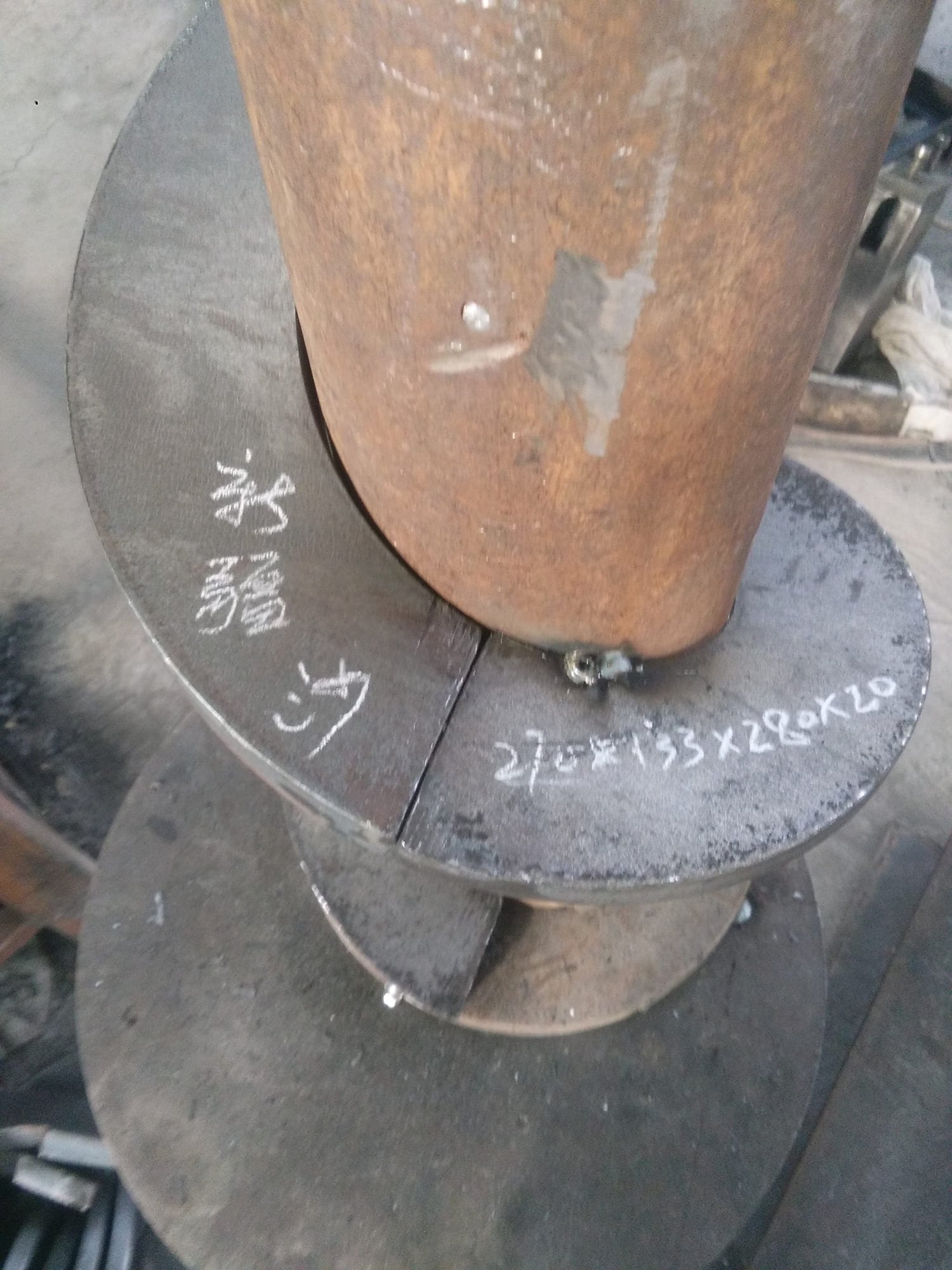
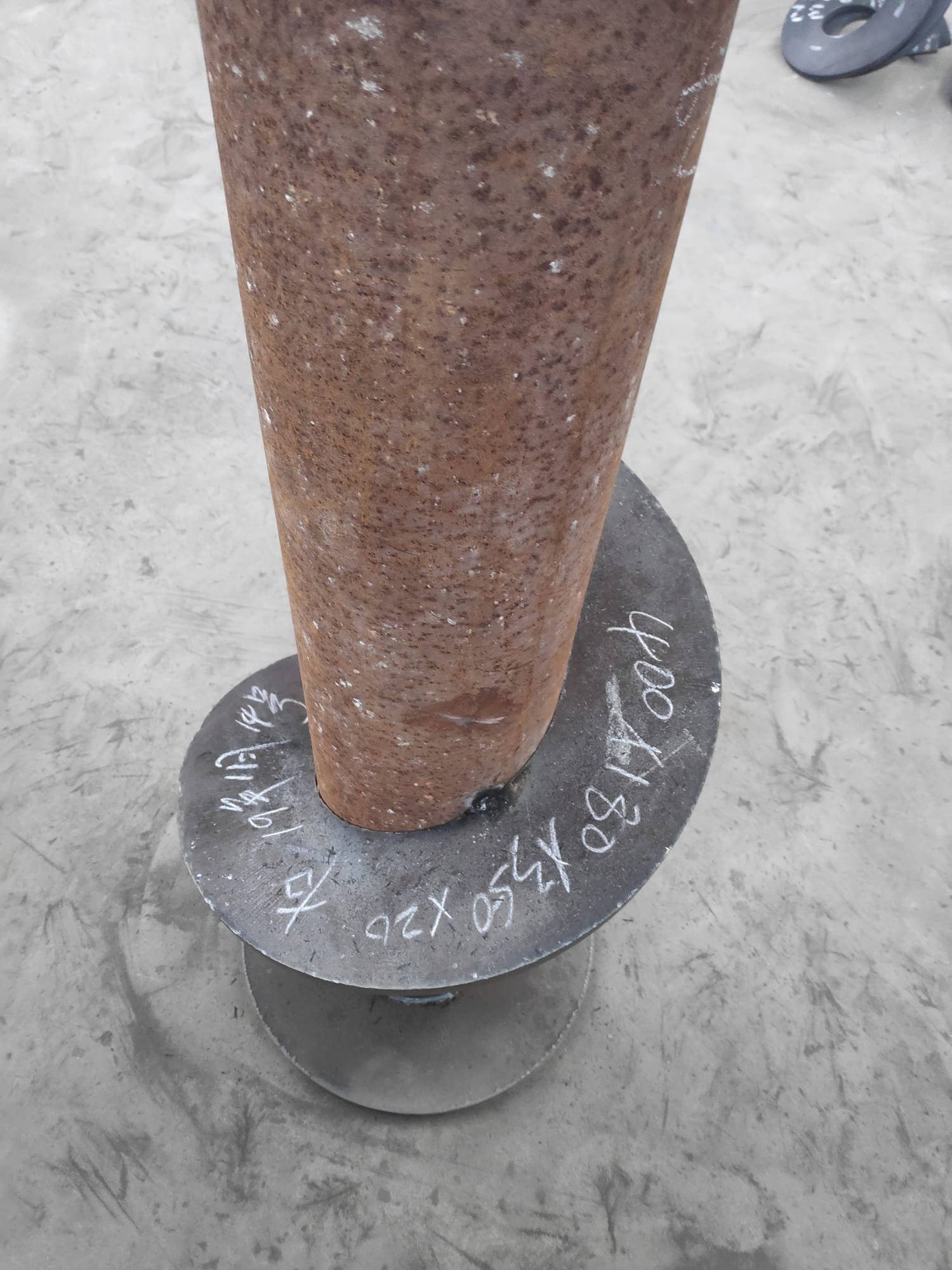
The drawing should distinguish the geometry of one segment from the overall screw assembly. Confirm the developed segment, number of pitches, overlap or joint position, finished assembly length and the datum used to control pitch after welding. This prevents a single-pitch part from being quoted as though it were a complete auger.
Joining preparation
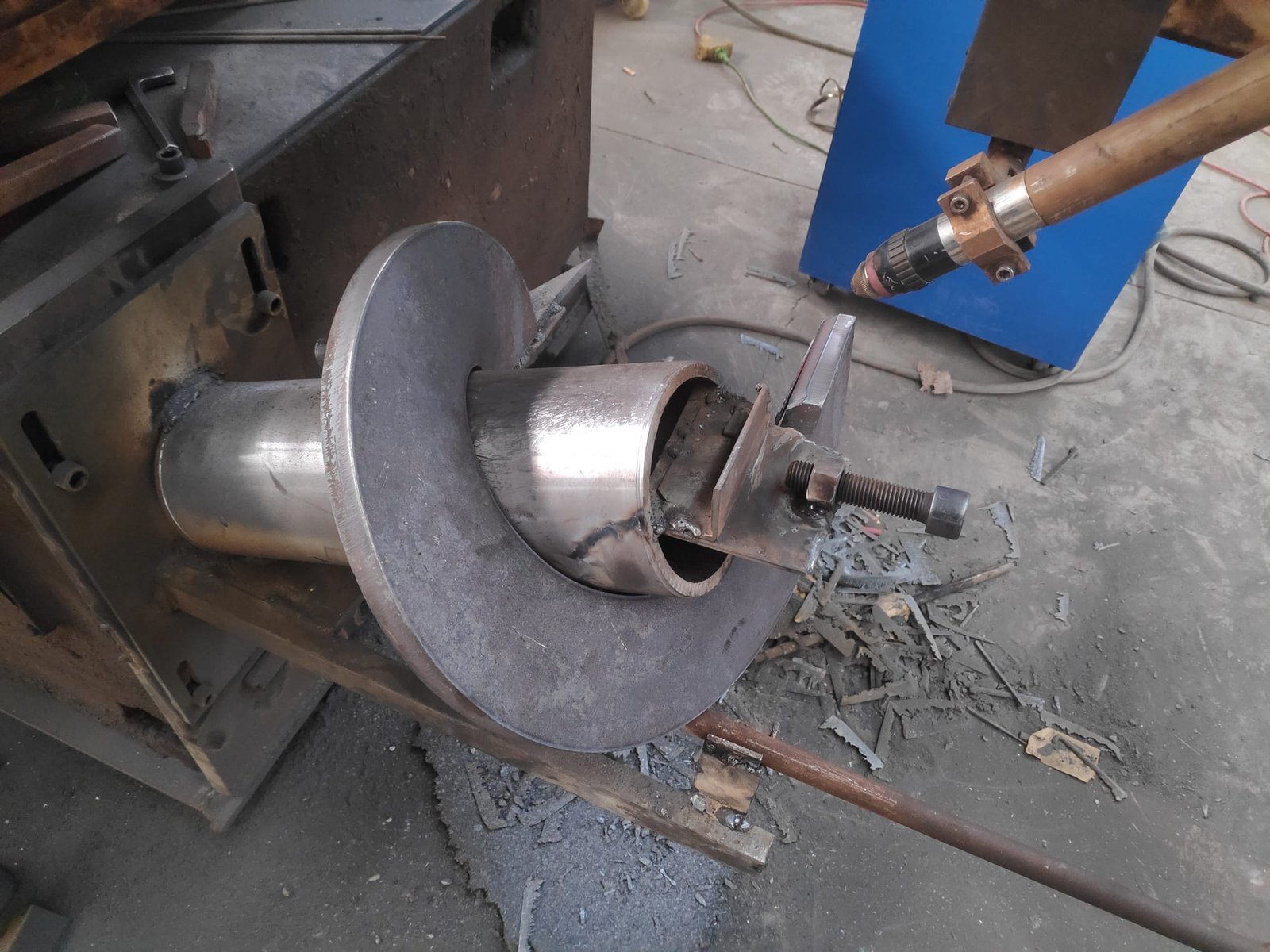
Segments can be prepared for the buyer's planned joining route, subject to drawing review. State whether they will be welded to a centre tube, joined edge-to-edge, fitted to an existing shaft or supplied as matched subassemblies. Include joint location, bevel or root condition, weld access and any post-weld dimensional requirement.
Material and wear options
Carbon and stainless steels cover many general or corrosion-sensitive duties. Manganese and wear-resistant grades may be considered for abrasive agriculture, mining, fertilizer and material-handling applications, but the exact grade, plate condition, forming behaviour and welding procedure must be checked before confirmation.
Packing and shipping arrangement
Choose loose segments when the buyer will assemble locally, matched and marked sets when pitch order matters, or agreed subassemblies when shipping size and handling permit. The quotation should record identification marks, corrosion protection, packing support and lifting or container restrictions.
When to use sectional flighting
Choose individual segments when the flight is too large, too thick or made from a material that is impractical for continuous rolling. The segments can be supplied for assembly and welding into an auger, conveyor or specialist replacement component.
Drawing review checklist
Send OD, ID, pitch, thickness, plate grade, rotation hand and segment quantity. Include any root or rim features, cut-outs and weld preparation. This lets the production team check each pitch rather than treating a large flight as a standard part.
Quote checklist
- Segment OD, ID, pitch, thickness, hand and quantity
- Single-segment geometry and total finished assembly length
- Material grade, plate condition and wear or corrosion duty
- Shaft or tube size, fit and weld/joining preparation
- Constant or variable diameter and pitch schedule
- Cut-outs, bosses, gaps, shaped edges and tolerances
- Loose, matched-set or subassembly shipping preference
- Drawings of the segment, assembly and mating parts
Before quotation
Frequently asked questions
Use these answers as a starting point. Final geometry, material and equipment scope are confirmed from the project information.
Are sectional blades supplied as single segments or complete assemblies?
Either arrangement can be reviewed. The quotation must state whether supply is loose segments, matched sets or agreed welded subassemblies, together with the finished assembly length.
What dimensions define one sectional flight segment?
Provide OD, ID, pitch, thickness, hand and the geometry of one segment. Also state segment count, joint position and the required overall assembly length.
Which materials can be considered for abrasive service?
Manganese and wear-resistant steels may be considered alongside carbon and stainless grades. Exact material, hardness, forming response and welding method require review.
What joining details should be shown on the drawing?
Show the shaft or tube interface, joint position, bevel or root condition, weld access, segment order and the dimensional requirement after assembly.
How are large segments prepared for shipment?
Supply can be planned as loose pieces, matched marked sets or agreed subassemblies. Packing support, corrosion protection, lifting and container limits are confirmed in the quotation.
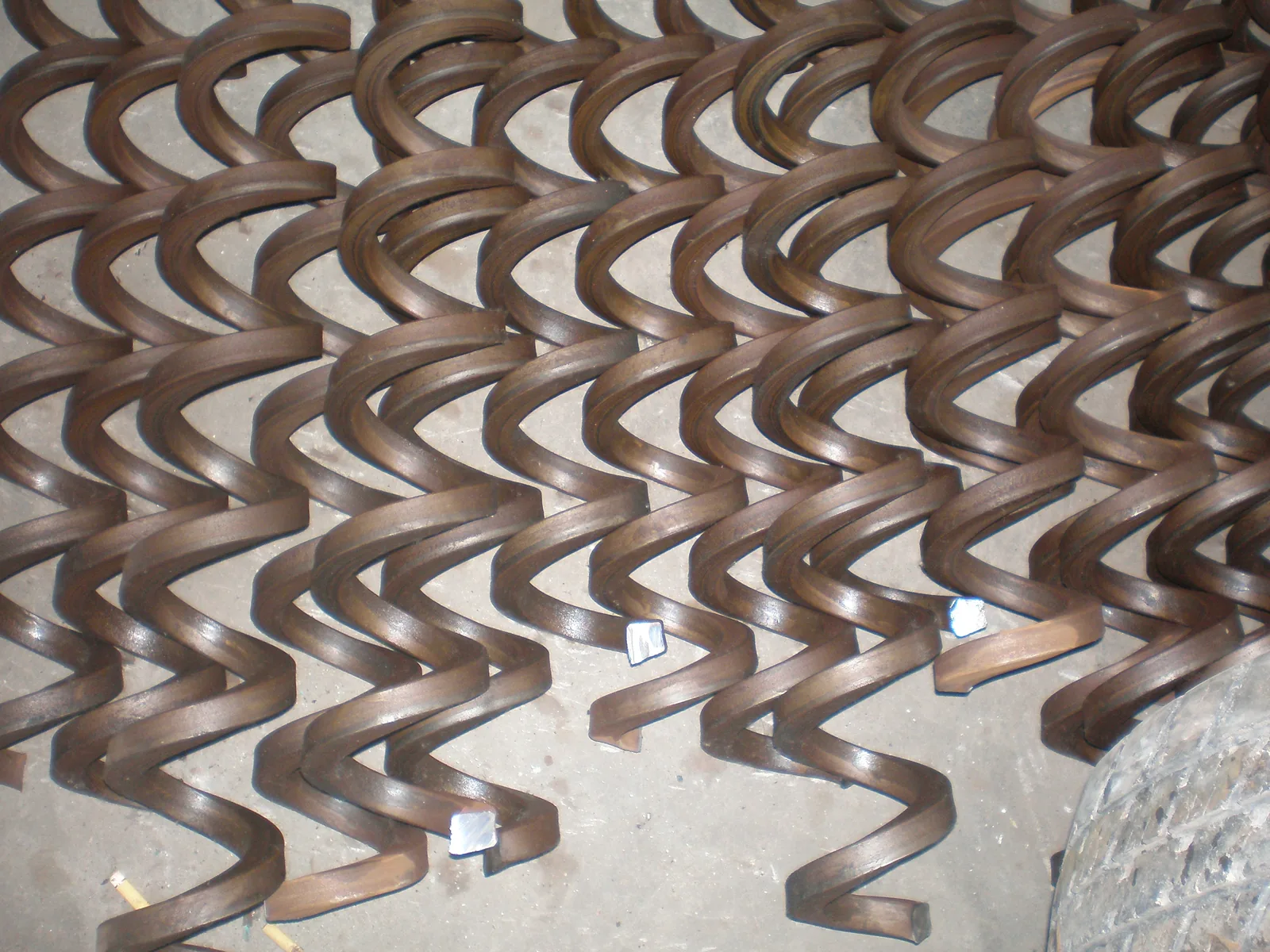
Square-Bar Flexible Auger
A flexible auger made from a square-section profile, with the bar section, coil geometry and installed tube route reviewed as one system.
View details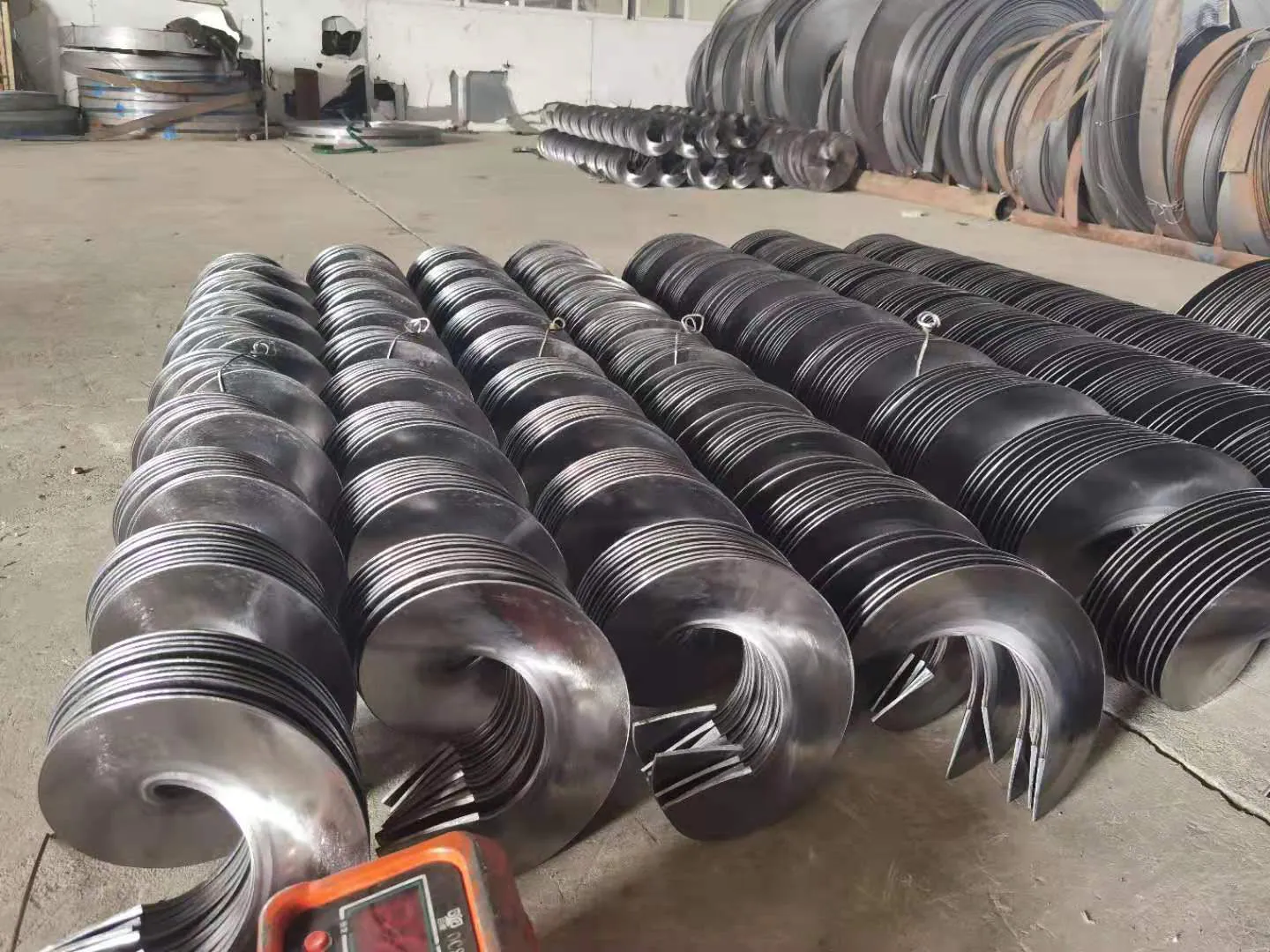
Cold-Rolled Continuous Screw Flight
Cold-formed strip flighting for applications that need continuous, seamless geometry and controlled pitch, diameter and thickness.
View details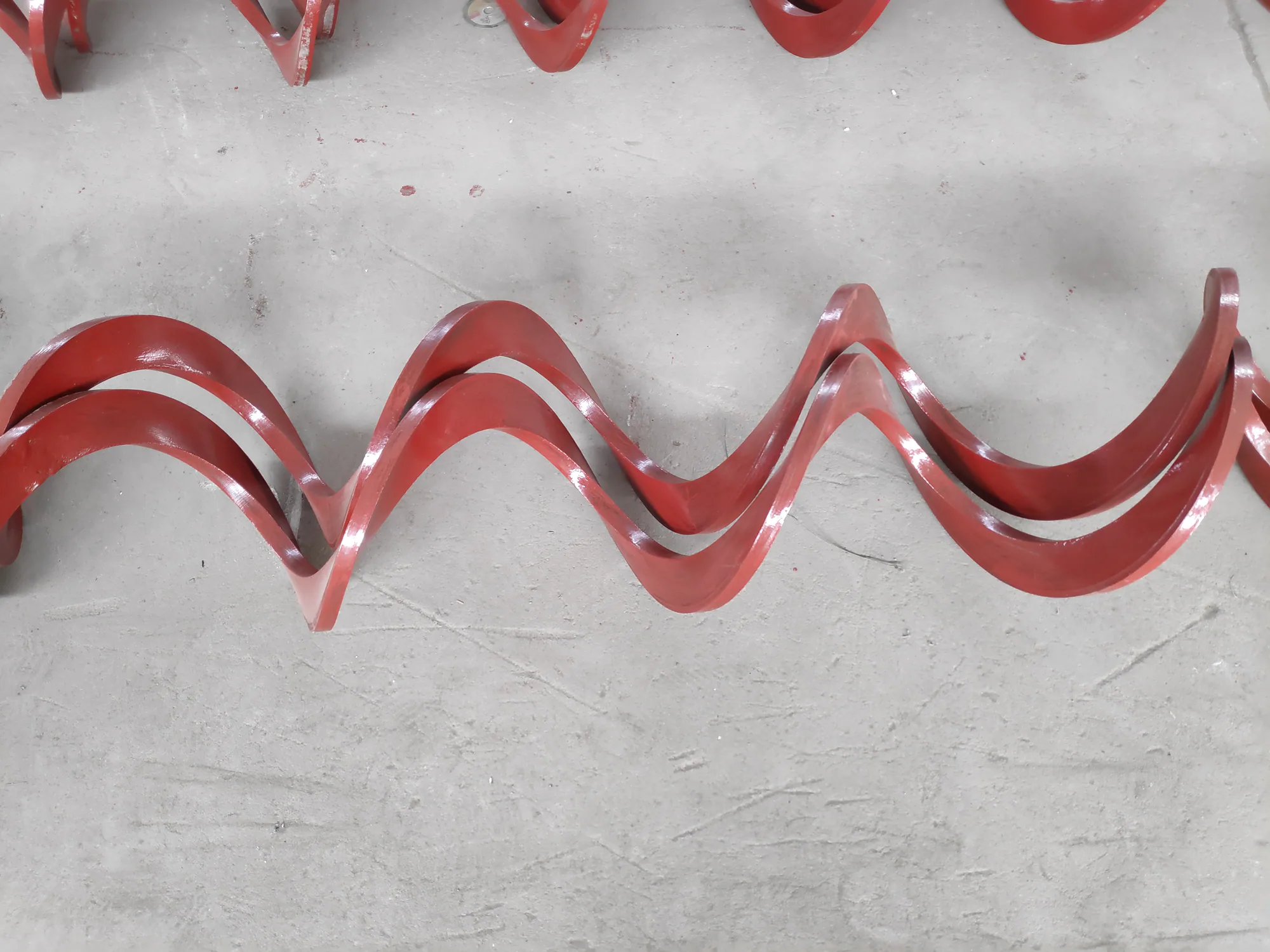
Continuous Constant-Thickness Auger Flight
A continuous mould-winding route for multi-pitch flights where material utilization and consistent wall thickness are priorities.
View details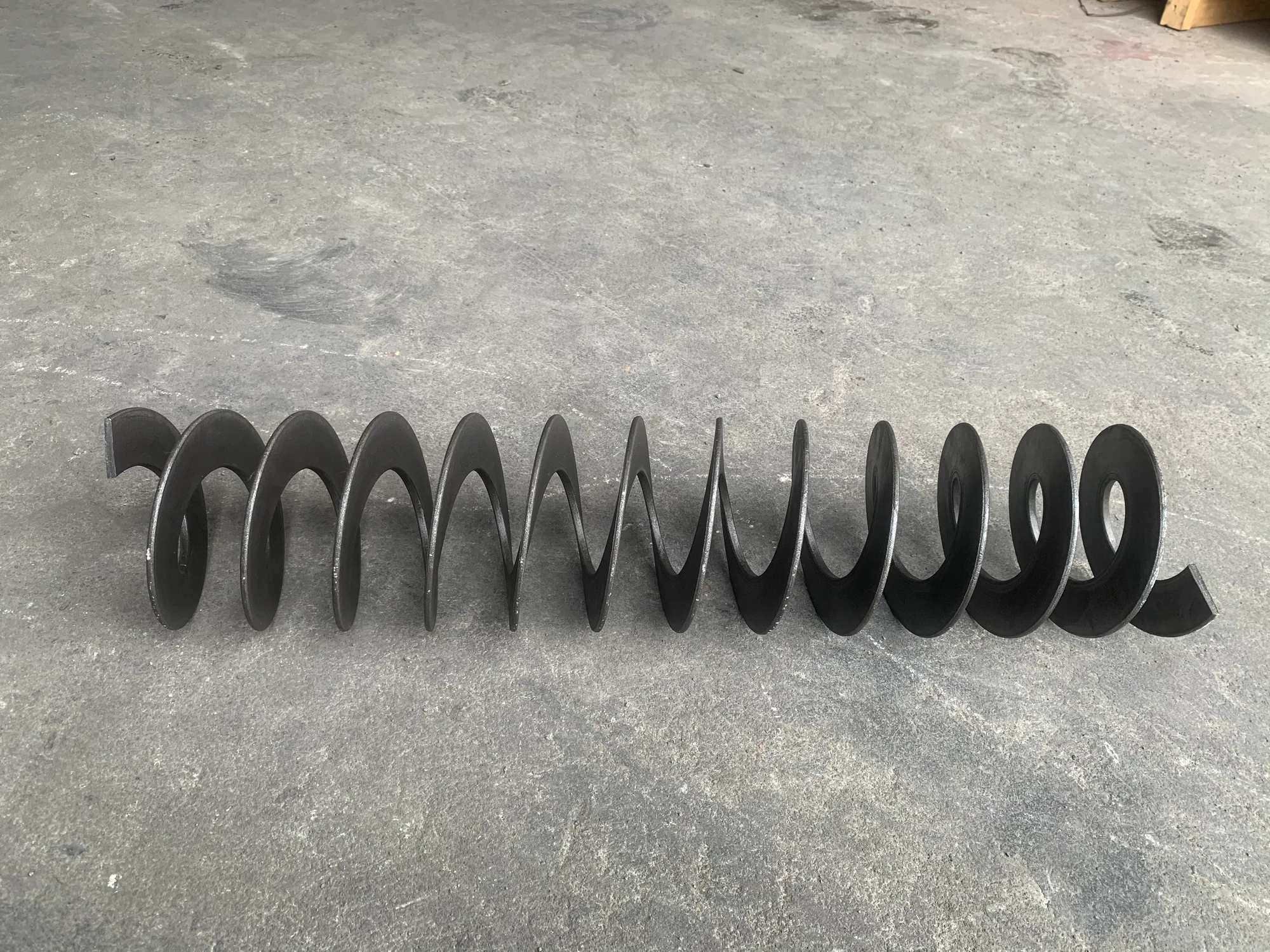
Rounded-Edge Spiral Flight
A helical flight whose rounded edge is part of the specified section, requiring profile dimensions as well as the normal helix geometry.
View detailsEngineering review
Discuss your Sectional Spiral Blade requirement
Share the diameter, pitch, thickness, material, quantity and application. Our team will review the manufacturing route before quoting.